After observing the on-chain movements of over 1,000 top-tier wallets on Polymarket throughout 2025 and 2026, a clear pattern emerged. While retail traders were busy guessing election outcomes or pop-culture events, "Whales" (wallets with over $100k in volume) were quietly executing mathematical arbitrage.
They aren't betting; they are hedging. Here are the three primary mechanisms they use to generate consistent returns without taking on directional risk.
1 Secret #1: They Use Multi-Leg Synthetic Hedges
The most lucrative hidden strategy of high-volume traders is exploiting massive pricing inefficiencies between isolated prediction liquidity pools.
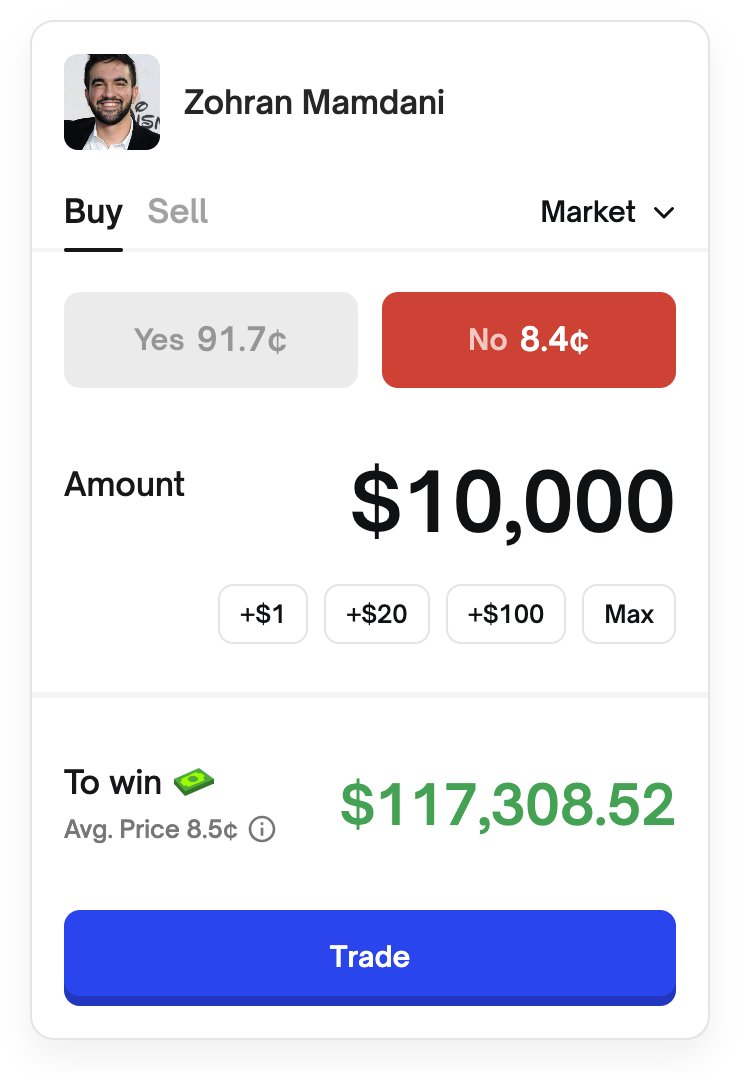
Pricing discrepancy on Kalshi
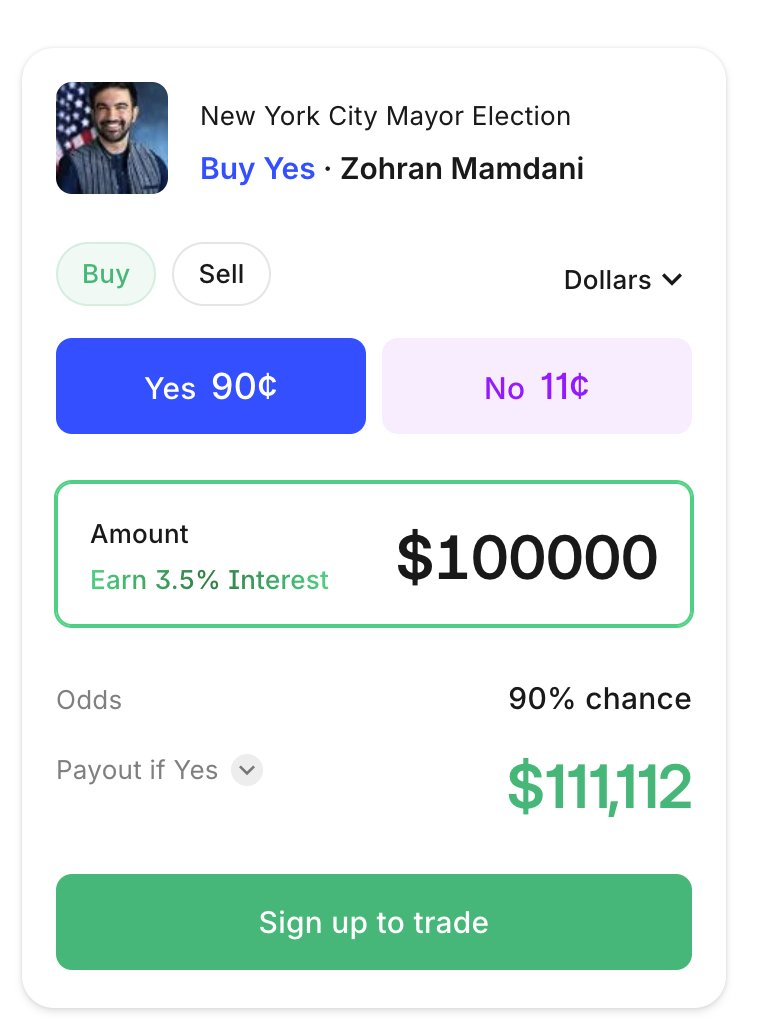
Contrary pricing on Polymarket
Real Arbitrage Example
By purchasing contrasting positions across both platforms with a total investment of $110,000, the Whales lock in a guaranteed net-positive outcome:
- ✓ If the final result is YES, profit secured: $1,112
- ✓ If the final result is NO, profit secured: $7,308
If you can buy "YES" on Platform A for $0.80 and buy "NO" on Platform B for $0.15, your total cost to cover every possible outcome is $0.95. Since one outcome is mathematically guaranteed to hit 100% ($1.00), the Whale captures a 5.2% instant return. This is known as a Negative Spread.
2 Secret #2: They Drain The "Maker" Subsidies
Retail traders pay market spread fees. Institutional whales extract yields from the platform. Polymarket subsidizes market makers to synthesize order book depth through a daily USDC payout construct.
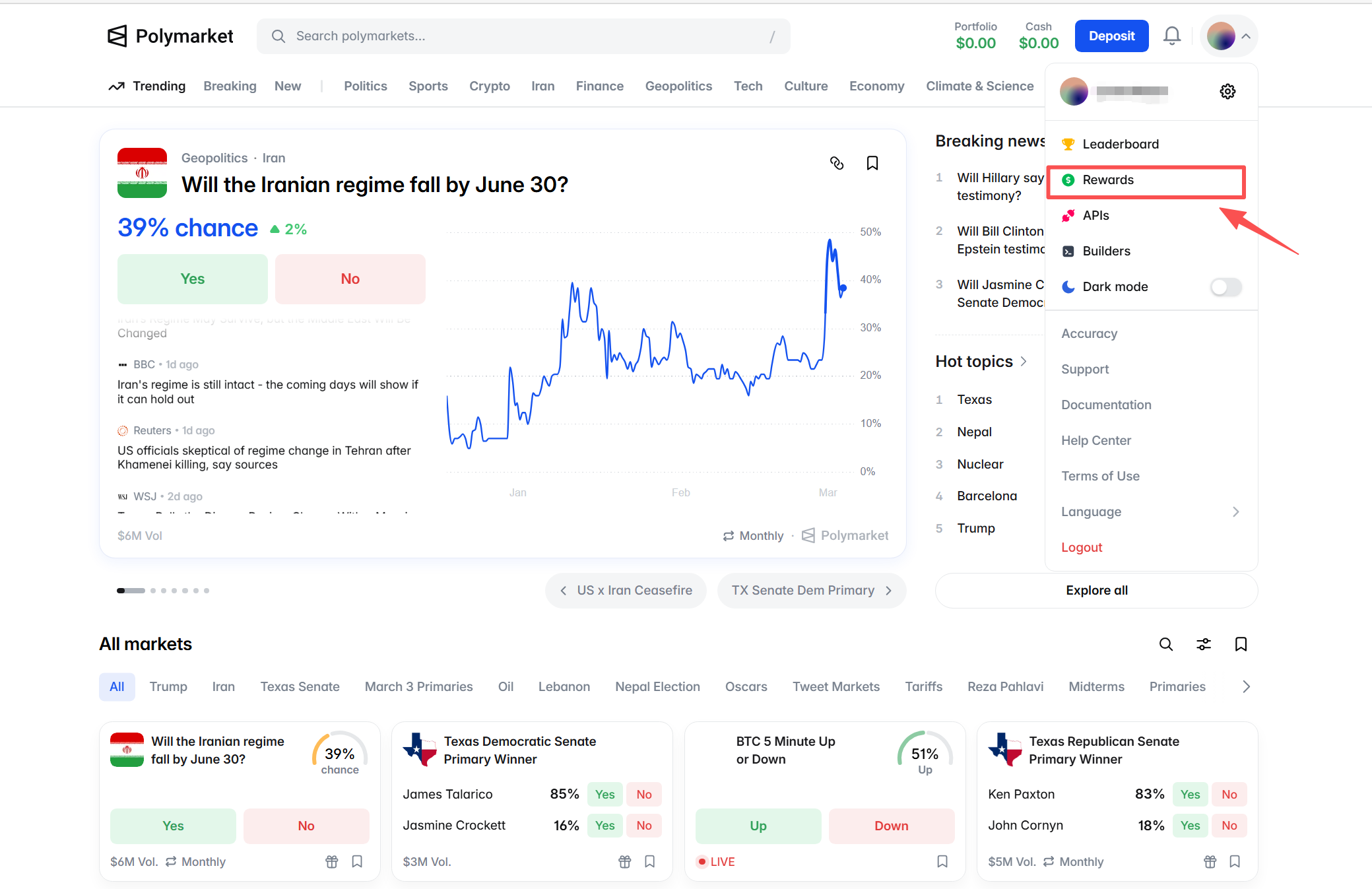
Through a Quadratic Spread Function, the algorithm heavily compensates limit orders (Maker orders) placed exactly near the Midpoint price. By strategically parking capital just fractions of a cent away from the spread, whales collect daily passive USDC regardless of whether the event actually resolves in their favor.
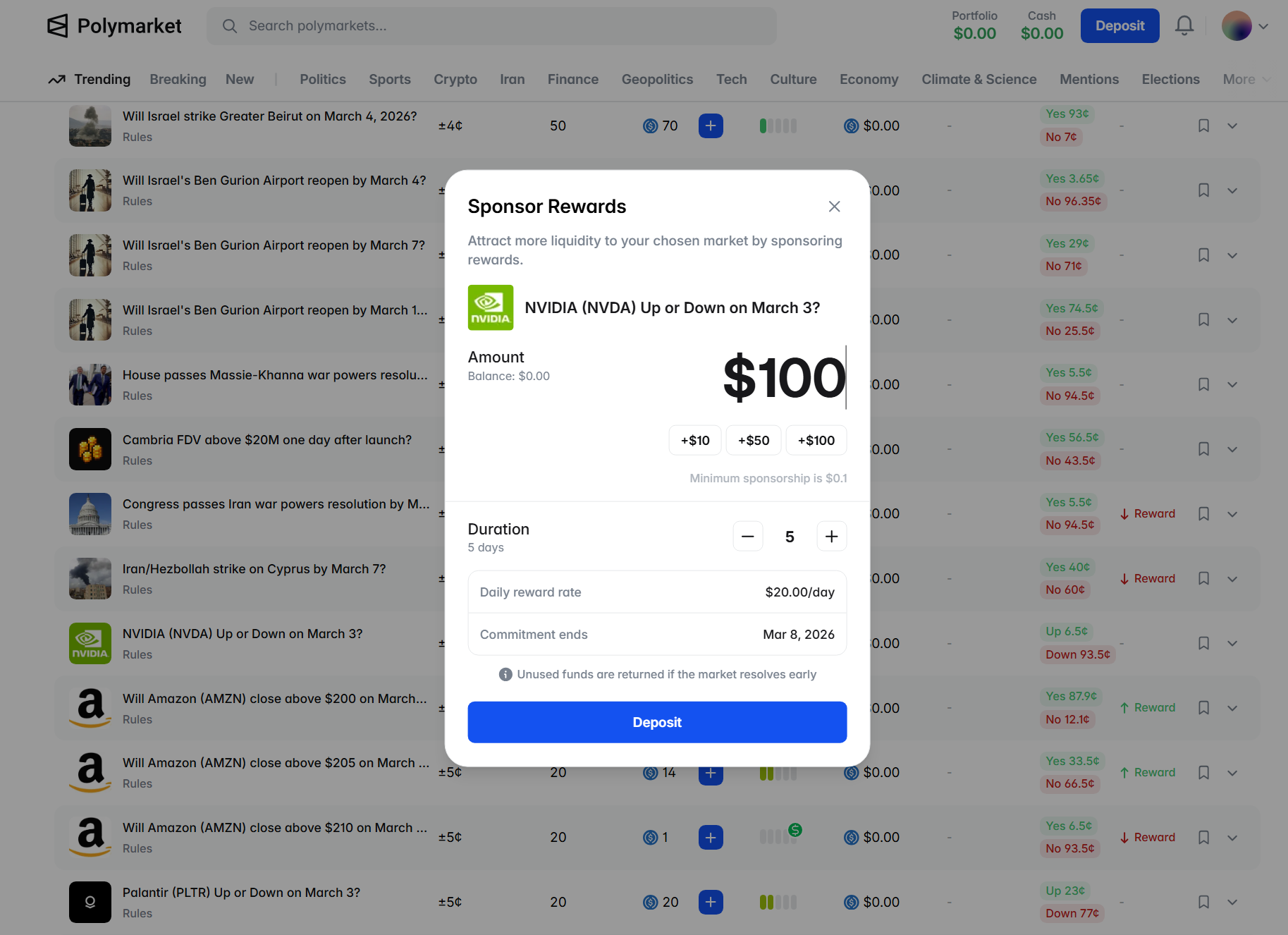
When you see order book rows tagged with the tiny "$ Reward" icon, you're looking at Whale capital executing "Two-sided Quoting"—bidding on both Yes and No simultaneously to milk the hourly snapshots.
3 Secret #3: They Shadow Dark Pool Wallets
The final technique is purely data-driven: Wallet Shadowing. In prediction environments, massive single transactions are frequently backed by insider political data or hyper-fast algorithms.
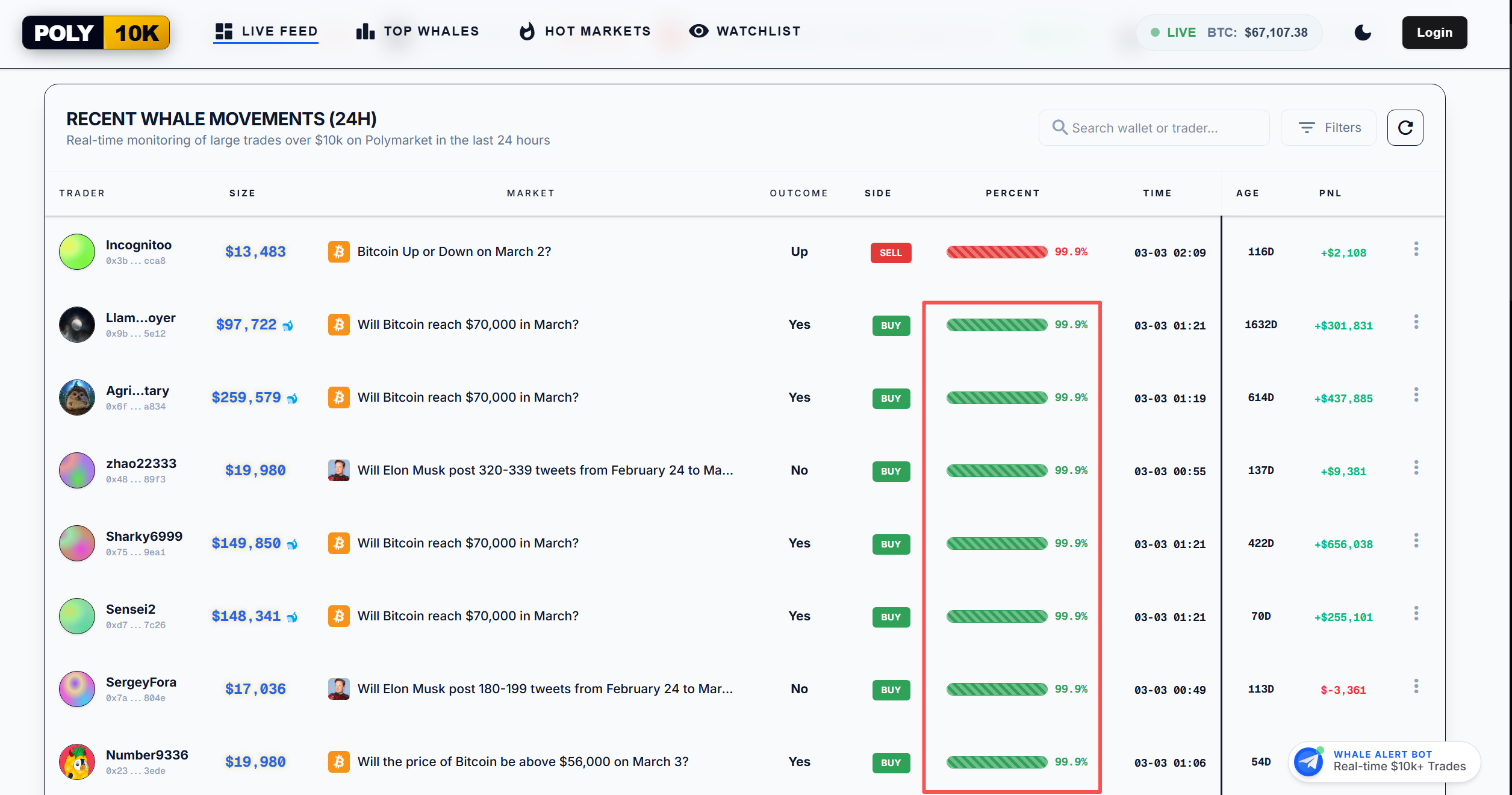
Monitoring a near 99% probability sweep from a Whale wallet.
When a Whale aggressively sweeps the order book, pushing a "Yes" contract to 99.5%, there is often a tiny 0.5% margin left over. Other algo-traders will immediately "sweep" these remaining tail-end fractions. It yields a tiny profit, but the win rate approaches 99.9%.
⚠️ The "Black Swan" Risk:
Even at 99%, black swans (event cancellations or UMA oracle disputes) can occur, wiping out the 100% collateral. This is why risk management limits these trades to tiny fractions of a portfolio.
Note: Because executing these sweep orders manually is nearly impossible before probabilities adjust, professional traders often rely on automated monitoring tools like the Poly10K Tracking Platform to monitor whale alerts via API endpoints.
The "Secret" Step 0 (For Beginners)
Here is the reality check: Secret 1, 2, and 3 require significant starting capital, coding knowledge, and API integrations. They are not for beginners.
However, there is a massive, hidden loophole currently active that allows absolute beginners to extract risk-free value from Polymarket without making a single trade.
The Dub.co Partner Loophole
Polymarket is heavily incentivizing network growth and will pay you a guaranteed $10 simply for routing new liquidity. No trading required. No risk of loss. It is the easiest money on the platform right now.
See How I Earn Passive Income With This Loophole →